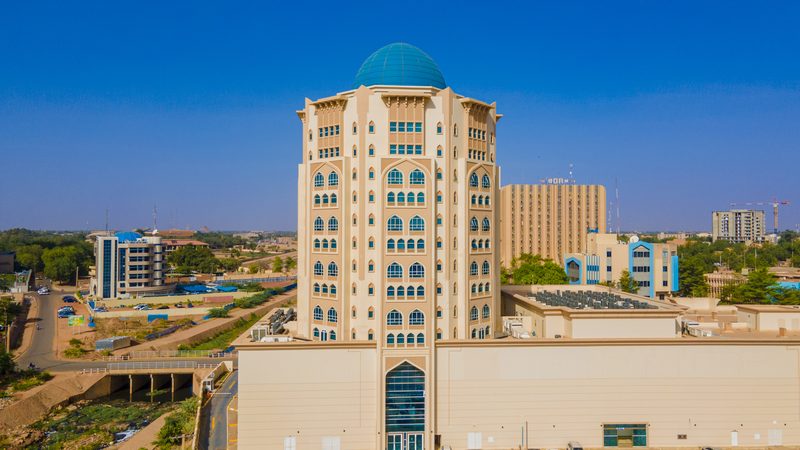

Where to Stay in Niamey
Your guide to the best areas and accommodation types
Niamey spreads in clear zones fanning from the Niger River and the central Plateau. The Plateau quarter hosts the better hotels. The riverside Gaweye strip carries the only luxury property on the water. Residential neighborhoods like Dar Es Salam and Koira Kano sell guesthouse rates at a fraction of the center.
Niamey's hotel stock is lean by West African capital standards. Mid-range properties cluster near the Plateau and Nouveau Marché. The Radisson Blu Gaweye stands alone at the top tier. Budget travelers find solid value in the south-central residential quarters.
Budget
10,000-20,000 XOF per night for guesthouses and basic auberges
Mid-Range
25,000-60,000 XOF per night for 3-star hotels with air conditioning and generator backup
Luxury
90,000-180,000 XOF per night for the sole internationally branded property
Our Picks
Radisson Blu Hotel Gaweye Niamey
→
Where to Stay in Niamey
Hand-picked hotels across price tiers for every visitor.
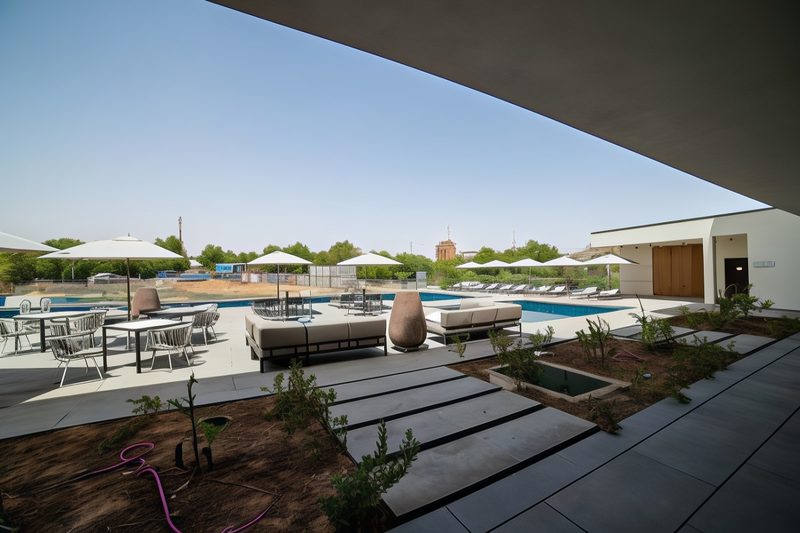
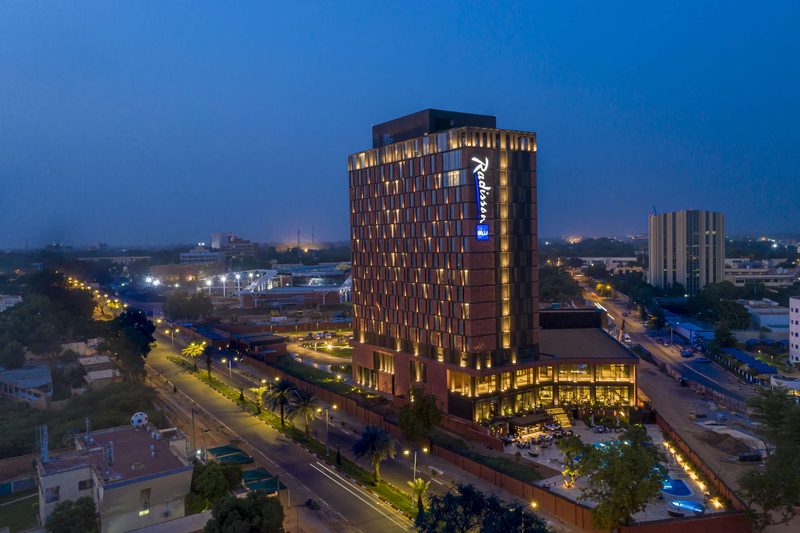
Our Top Picks
The highest-rated hotel in each price range, selected from all neighborhoods.
Top Pick: Plateau
Budget
Hôtel Ténéré
"The airport pick-up service is good and convenient. Although in the French-speak…"
Parking
Airport pick-up
Airport drop-off
Plateau
Check prices on Trip.com →
Top Pick: Plateau
Mid Range
Hotel Terminus
Gym
Parking
Airport pick-up
Airport drop-off
Plateau
Check prices on Trip.com →
Top Pick: Plateau
Luxury
Radisson Blu Hotel Niamey
"The location is excellent, close to the city center, and offers river views."
Outdoor swimming pool
Sauna
Spa
Massage room
Plateau
Check prices on Trip.com →
Best Areas to Stay
Each neighborhood has its own character. Find the one that matches your travel style.
Hotel recommendations verified
Plateau
Mid-range to luxury
The administrative and diplomatic core of Niamey, where ministries, embassies, and the best-maintained roads cluster on slightly elevated ground above the surrounding city. Tree-lined avenues shade the walk between government buildings, the air carries a faint mineral dust from the Sahel on most afternoons, and the sound of generators humming behind compound walls is a constant backdrop. Expats, NGO staff, and regional business delegations make up a significant share of the hotel clientele here, giving the quarter a cosmopolitan quietness unlike the commercial neighborhoods below.
- ✓ Walking distance to the Grand Mosque and National Museum of Niger
- ✓ Best restaurant density in Niamey
- ✓ Higher road quality and street lighting than outlying areas
- ✓ Highest concentration of international organizations and services
- ✗ Room rates noticeably higher than residential neighborhoods
- ✗ Government street closures during ministerial movements can delay transport
Recommended places to stay in Plateau
Budget
Hôtel Ténéré
"The airport pick-up service is good and convenient. Although in the French-speak…"
Parking
Airport pick-up
Airport drop-off
✓ Verified
Check prices on Trip.com →
Mid Range
Hotel Terminus
Gym
Parking
Airport pick-up
Airport drop-off
✓ Verified
Check prices on Trip.com →
Luxury
Radisson Blu Hotel Niamey
"The location is excellent, close to the city center, and offers river views."
Outdoor swimming pool
Sauna
Spa
Massage room
✓ Verified
Check prices on Trip.com →
Luxury
Bravia Hotel Niamey
"The best hotels in Niamey"
Outdoor swimming pool
Gym
Airport pick-up
Luggage storage
✓ Verified
Check prices on Trip.com →
Luxury
Noom Hotel Niamey
Outdoor swimming pool
Gym
Private parking
Airport pick-up
✓ Verified
Check prices on Trip.com →
Gaweye
Mid-range to luxury
The riverside strip along the western bank of the Niger River, where golden light floods the brown water at dusk and fishermen's pirogues cut silently across the current below the embankment. The Gaweye area carries the quietest nights of any central zone in Niamey, and the cool breeze off the river cuts the Sahel heat from late afternoon onward. The smell of wet mud and river grass rises from the bank at low water, and the silhouette of the bridge at Pont Kennedy stretches across the horizon in the early morning haze.
- ✓ Unobstructed Niger River views and persistent evening breezes
- ✓ Quietest sleeping environment in central Niamey
- ✓ Swimming pool access at the Radisson property
- ✓ Beautiful warm light on the water at both sunrise and sunset
- ✗ Very limited dining options outside the main hotel
- ✗ Distance from the Nouveau Marché commercial zone requires transport
Recommended places to stay in Gaweye
Budget
Tenere
✓ Verified
Check prices on Trip.com →
Mid Range
Homeland Hotel
Airport pick-up
Airport drop-off
Currency exchange
Wi-Fi in public areas
✓ Verified
Check prices on Trip.com →
Terminus
Budget to mid-range
Named for the old Niamey railway terminus building, this district sits west of the central Plateau in a zone of modest commerce, repair workshops, and dusty market stalls where the smell of charcoal grills and motor oil mingles in the afternoon heat. Motorcycle taxis cluster at every junction, and the faded colonial architecture of the terminus itself still anchors the streetscape. The neighborhood lacks the polish of the Plateau but compensates with lower rates and a gritty character that independent travelers find more honestly representative of Niamey.
- ✓ Lowest room rates of any central Niamey zone
- ✓ Excellent access to local food stalls and charcoal-grilled street food
- ✓ Authentic daily commerce away from the expat and NGO bubble
- ✗ Noisier than the Plateau or Gaweye after dark
- ✗ Power and water cuts are more frequent than in the administrative quarter
Recommended places to stay in Terminus
mid_range
Hôtel Terminus
Nouveau Marché
Budget to mid-range
The commercial engine of modern Niamey, where the covered market swells with the overlapping sound of haggling voices, bolts of bright indigo and orange fabric cascade from stall fronts, and the sharp smell of dried spices and cured leather hangs thick in the lanes. The Nouveau Marché district never fully quiets: vendors roll up after dark and street food sellers take their ground, filling the warm air with charcoal smoke and the sizzle of grilling meat. Hotels here absorb a mix of Nigerien traders, regional buyers from Burkina Faso and Nigeria, and visitors connecting to the bush taxi station.
- ✓ Immediate access to Niamey's best fresh produce and fabric stalls
- ✓ Abundant cheap street food from dawn until after midnight
- ✓ Well-connected by shared taxi to every other district in the capital
- ✗ Daytime noise levels near the market perimeter are intense and continuous
- ✗ Pickpocketing risk higher than other neighborhoods in crowded market lanes
Recommended places to stay in Nouveau Marché
mid_range
Hôtel Central
Yantala
Budget to mid-range
Yantala sprawls westward toward Diori Hamani International Airport and keeps Niamey's daily rhythm. Women pound millet in shaded compounds before the heat rises. Dawn prayer echoes off flat roofs. Jasmine drifts from courtyard gardens once the sun drops. Early flights make the area popular. Guesthouses now line the main roads as the neighborhood matures.
- ✓ Closest residential neighborhood to the international airport
- ✓ quieter nights than central Plateau or market districts
- ✓ Accommodation rates are lower than downtown for comparable quality
- ✗ Transport required to reach the Plateau, river, and markets
- ✗ Fewer restaurant options within easy walking distance than central zones
Recommended places to stay in Yantala
mid_range
Hôtel Noommo
Koira Kano
Budget
Koira Kano fills south-central Niamey with working families. Mosque loudspeakers, roadside grills, and motorcycle roar layer the soundscape. Dust and roasting corn scent the dry-season air. White-uniformed kids flood the lanes at sunrise. Guesthouses are simple yet welcoming.
- ✓ Among the lowest overnight rates available in Niamey
- ✓ Authentic local food at street stalls on every corner
- ✓ Well-served by shared taxis running to the city center
- ✗ No international-standard hotels in the immediate area
- ✗ Heavy rains turn unpaved side roads into mud traps.
Recommended places to stay in Koira Kano
mid_range
Hôtel Bonferey
Dar Es Salam
Budget to mid-range
Dar Es Salam lies southeast of the Plateau and feels calmer than downtown. Middle-class Nigerien families share lanes with Lebanese merchants. Bougainvillea spills over compound walls in pink and red. Afternoons fall still between prayer calls. Shared taxis zip to the Plateau in minutes.
- ✓ quiet evenings with minimal street noise after dark
- ✓ Short shared-taxi ride to the Plateau and market district
- ✓ A handful of Lebanese restaurants in the quarter serve the best mezze in Niamey
- ✗ Signs are scarce. First-timers need local help.
- ✗ Fewer ATMs and money-exchange facilities than central areas
Recommended places to stay in Dar Es Salam
mid_range
Hôtel Banizoumbou
Boukoki
Budget
One of Niamey's most densely settled neighborhoods, Boukoki occupies the northern fringe of the urban core and pulses with the energy of a city within a city. The narrow lanes echo with the sound of metalworkers hammering in open workshops and women calling across alleyways, while evening markets fill with the aroma of fried bean fritters and sweetened millet porridge simmering in large pots over charcoal fires. Accommodation is almost entirely local-facing and delivers some of the most affordable overnight stays in the capital.
- ✓ The most affordable rooms available anywhere in Niamey
- ✓ Immersive local market atmosphere found nowhere near the tourist zone
- ✓ Evening street food scene is varied and excellent value
- ✗ No hotels approaching international business or comfort standards
- ✗ Power outages are frequent and generators uncommon at this price tier
Recommended places to stay in Boukoki
mid_range
Hôtel Goungou
Kalley
Budget
Kalley splits into Est and Ouest east of center. Workshops, schools, and cheap eateries line unpaved streets. Goats nose through melon rinds. Dried fish scent drifts from noon to dusk. Budget rooms serve eastern Niamey well.
- ✓ Affordable rates with reasonable cleanliness across the available properties
- ✓ Good access to shared transport heading east across the city
- ✓ Fewer tourist-oriented touts than the Plateau and market zones
- ✗ Further from the major sights than central neighborhoods
- ✗ Wet-season rain from June to September churns roads into ruts.
Recommended places to stay in Kalley
mid_range
Hôtel Nassara
Talladjé
Budget to mid-range
The fastest-growing residential neighborhood in eastern Niamey, Talladjé has absorbed wave after wave of arrivals from the rural Sahel, producing a quarter of low concrete houses, new mosques with freshly painted white minarets, and a market that smells of ground peanut paste and dried hibiscus blossoms in the morning air. Streets are wide by Niamey standards, air turns thick with fine reddish dust during the harmattan months when the horizon disappears in a warm haze, and an entrepreneurial energy fills the commercial strips near the main road. Several guesthouses have opened over the past decade as the neighborhood has consolidated into a stable residential community.
- ✓ More floor space per room than most central Niamey guesthouses
- ✓ Growing restaurant scene with good Nigerien home cooking at low cost
- ✓ Quieter environment than the commercial center at night
- ✗ Longer journey time to the Plateau and river district than central neighborhoods. Factor in traffic. Plan accordingly.
- ✗ Limited international banking infrastructure in the immediate area
Recommended places to stay in Talladjé
mid_range
Hôtel Hamdallaye
Find Hotels in Niamey
Compare prices and book your perfect stay
Find the best hotel for your stay on Trip.comPrices via Trip.com. We may earn a commission from bookings.
Accommodation Types
From budget-friendly hostels to luxury hotels, here's what's available.
International Hotels
90,000-180,000 XOF per night
Niamey's only international-brand property is the Radisson Blu Gaweye, with a pool and 24-hour power on the Niger River bank. Sunset drinks on the terrace are legendary. Expect flawless service.
Best for: Corporate travelers, diplomats, and visitors requiring international-standard service and uninterrupted power. If you need a fax at 3 a.m., they will deliver.
Book at least six weeks ahead from October through February, when regional delegations and conference groups fill the limited room stock entirely. No exceptions.
Local Hotels
25,000-60,000 XOF per night
Locally owned mid-tier hotels across the Plateau and Terminus zones offer air conditioning, restaurant service, and generator backup without international prices. Good beds, cold beers, and zero sticker shock.
Best for: Business travelers and aid workers who need reliable air conditioning and breakfast service without paying Radisson rates. Smart choice.
Confirm the generator schedule before paying: some properties run backup power only until midnight, which matters on hot nights when the temperature barely drops. Ask twice.
Guesthouses and Auberges
10,000-22,000 XOF per night
Family-run auberges in residential neighborhoods like Dar Es Salam, Koira Kano, and Boukoki offer the lowest rates and the most personal stays in Niamey. Expect shared courtyards, home-cooked dinners, and lively conversation.
Best for: Independent travelers, overlanders, and researchers on extended field assignments who prefer local character over hotel services. Bring stories, leave friends.
Bring cash in small CFA franc notes. Card readers are absent at almost all guesthouses in Niamey and mobile payment terminals are not yet standard outside the Plateau. Count your change.
NGO and Expat Guesthouses
35,000-70,000 XOF per night
Several international organizations run semi-private guesthouses near the Plateau that accept outside bookings when organizational travel is light. Quiet gardens, tight security, and excellent coffee.
Best for: Aid workers, researchers, and travelers who can provide organizational affiliation or a local contact. Network first.
Book through the organization's reception directly, as most are not listed on general booking platforms and availability is not published online. Pick up the phone.
Booking Tips
Insider advice to help you find the best accommodation.
Reserve the Radisson Blu well before dry season
The Radisson Blu Hotel Gaweye Niamey has a limited room count and a loyal corporate client base. From October through February it regularly reaches capacity, and last-minute arrivals in Niamey cannot fall back on a comparable alternative. Six weeks ahead is the safe minimum for dry-season travel, with eight weeks recommended for the November and January conference peaks.
Ask about generator hours before paying
Power outages affect all but the most expensive properties in Niamey. Before paying any mid-range or budget hotel, ask how many hours the generator runs and specifically whether it covers the sleeping hours between midnight and five in the morning. A generator that shuts off at ten means a hot and sleepless night during the harmattan months when temperatures barely drop after dark.
Withdraw cash on the Plateau before heading out
ATMs in Niamey are concentrated near the Plateau and Nouveau Marché. Guesthouses in Boukoki, Koira Kano, Talladjé, and Kalley accept only CFA franc cash. Withdraw from a Plateau ATM before moving to any residential neighborhood to avoid the situation of arriving at a guesthouse with no local currency and no machine within walking distance.
Residential neighborhoods offer real savings
Dar Es Salam and Yantala charge meaningfully less than the Plateau for similar mid-range comfort. A shared taxi to the Plateau takes fifteen to twenty minutes and costs a small fraction of the daily rate difference, so travelers without fixed early-morning Plateau obligations lose nothing of practical value by staying in the quieter outer quarters.
When to Book
Timing matters for both price and availability.
High Season
Reserve six weeks ahead for October through February, at the Radisson Blu and the better Plateau properties, when international conferences, NGO annual meetings, and government delegations fill the limited quality stock simultaneously.
Shoulder Season
March and September sit between the intense heat of late dry season and the rains, with slightly reduced demand across most properties. Two to three weeks ahead is generally enough for mid-range hotels during these months.
Low Season
June through August brings rains that cool Niamey modestly but make unpaved residential roads difficult and reduce travel from neighboring countries. Demand drops across local hotels and walk-in rates are easy to negotiate in Terminus and Nouveau Marché.
Radisson Blu Hotel Gaweye Niamey demands advance booking, every season, no exceptions. Other Niamey properties can be locked in within a week of arrival. Residential zone guesthouses? Walk-ins welcome year-round. Simple.
Good to Know
Local customs and practical information.
Check-in / Check-out
Niamey hotels stick to noon check-in, 10:00 check-out. Guesthouses bend the rules. Arrive before noon, drop bags, wait for the room, no charge. Everyone smiles.
Tipping
Tipping is not expected. Yet it lands well in mid-range and international spots. Hand a small note to the attendant who kept your water coming during an outage or the fan whirring through the night. In Niamey, that kindness counts.
Payment
Radisson Blu and a handful of Plateau hotels take international cards. Every other Niamey property, from Terminus to Nouveau Marché mid-range spots, wants CFA franc cash only. ATMs outside the Plateau and central commercial zone are unreliable. Bring bills.
Safety
Niamey faces higher security pressure than most West African capitals because of the wider Sahel situation. The Plateau and Gaweye waterfront see the steadiest patrols. Check your home government advisory daily. Skip unfamiliar neighborhoods after midnight. Listen to hotel staff about no-go zones. Inside a guesthouse compound, Niamey turns warm and welcoming, treating travelers with honest kindness.